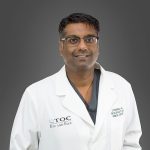
"Dear Dr. Durairaj, I don’t know when I have ever met a finer doctor than you. Your compassion and care you show to your patients is far superior than any doctor I have ever known. Thank you for your fine work on my eyes."
"Dr Nakra has made a noticeable improvement in my life. He did quad blephs on me. Prior to this, for my entire adult life, people commented on how tired I must be. No more. Now, I look great; that is, I look normal. Which is all I wanted. I'm 54, male, and had the surgery four years ago. I wish I'd done it twenty-four years ago."
"TOC Eye and Face was able to get me in to see Dr. Blaydon as a new patient in a very timely manner. Dr. Blaydon was excellent in his diagnosis and treatment and his staff was excellent as well. Wait time was little to none. My wife has seen another staff doctor at TOC in the past and received excellent treatment as well. Thanks!"
Our Board Certified Doctors perform thousands of eye and face surgeries every year. With over 100 years of combined experience, TOC Eye and Face is dedicated to helping patients and doctors reach their goals.
Top Doctors
Contact
Main Office
3705 Medical Parkway, Suite 120 Austin, Texas 78705 Medical Spa: 3705 Medical Parkway, Suite 130 info@tocaustin.com Tel: 512-458-2141 | Fax: 512-458-4824